
TRAINING FABRICATION STANDARD FOR OFFSHORE FREIGHT CONTAINERS – DNV
2.7-1
Offshore freight containers are critical for the safe and efficient transportation of
goods in the maritime industry, especially for the oil, gas, and energy sectors. Ensuring
these containers meet the stringent standards of DNV 2.7-1 is essential for compliance,
safety, and operational integrity. The standard sets forth requirements for design,
material, production, and certification, which can be complex and challenging to
implement. Professionals in this field need to thoroughly understand these standards to
ensure legal compliance and maintain safety.
This training aims to provide an in-depth understanding of the DNV 2.7-1 standards and
their application in the fabrication of offshore freight containers. Participants will learn
about the design principles, materials selection, manufacturing processes, and inspection
techniques required to comply with this standard. The training will guide participants
through the requirements and help them develop strategies to implement these
standards effectively in their operations.
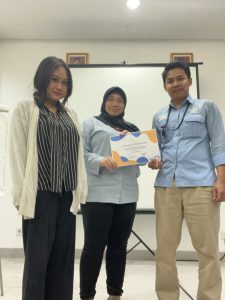
Instruktur: Siska Widya Eswara
Peserta: Muhammad Dian Ramadhan
CS: Dian Salmaa
Tempat dan Tanggal Pelatihan: Hotel Amaris Juanda, 13-14 Maret 2025
Tujuan Pelatihan:
1. To understand the scope and requirements of the DNV 2.7-1 standard.
2. To learn the key principles of designing and fabricating offshore containers.
3. To develop skills for quality control, inspection, and certification processes.
Silabus Pelatihan:
A: Introduction to DNV 2.7-1 Standard
• Overview of DNV 2.7-1
• Scope and Applications in the Offshore Industry
• Comparison with Other Relevant Standards
B: Design Principles and Requirements
• Structural Design and Analysis
• Material Selection and Corrosion Protection
• Safety and Performance Criteria
C: Fabrication and Manufacturing Processes
• Welding Techniques and Procedures
• Assembly and Construction Methods
• Quality Assurance and Control in Fabrication
D: Inspection and Certification
• Non-Destructive Testing (NDT) Methods
• Certification Process and Documentation
• Periodic Inspection and Maintenance Requirements
E: Case Studies and Best Practices
• Real-world Applications and Challenges
• Lessons Learned from Industry Examples
• Strategies for Compliance and Efficiency
F: Workshop and Practical Application
• Hands-on Session with Equipment and Materials
• Group Discussion on Implementation Strategies
• Problem-solving and Innovation in Fabrication